You may develop trigger finger if you have diabetes a condition that makes your blood sugar level go up. Trigger finger can happen in any of your fingers including your thumb.
 What Are The Warning Signs Of Trigger Finger Georgia Hand Shoulder Elbow Orthopaedic Specialists
Flexor tendons are responsible for moving the fingers.
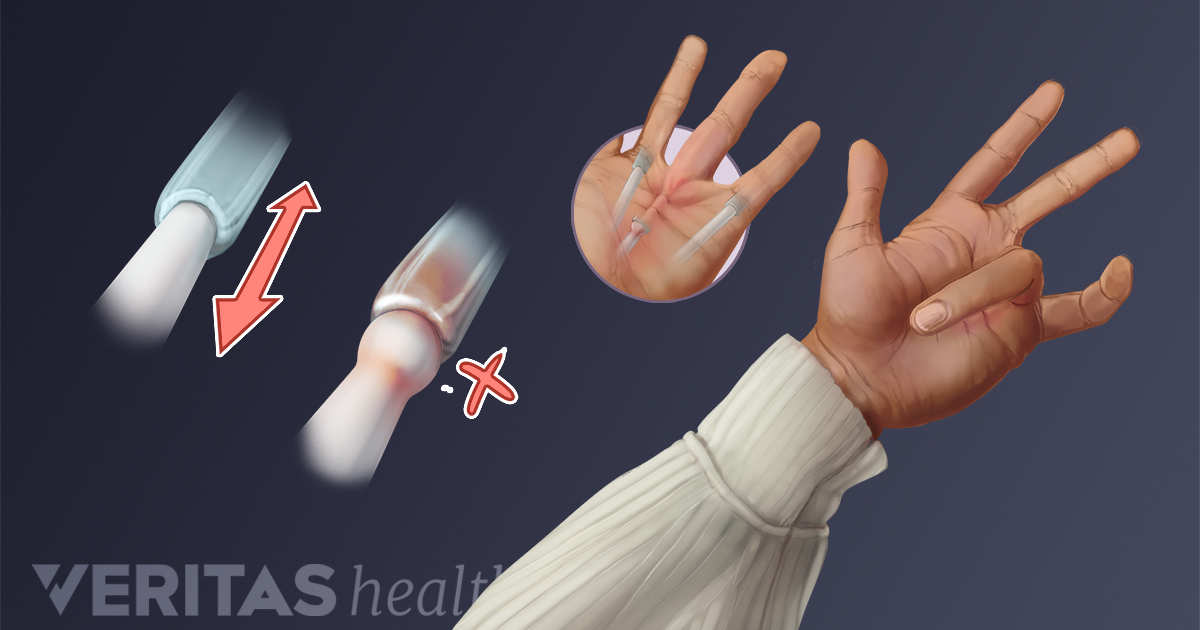
What causes trigger finger. Triggering of the affected finger is usually worse when you grasp an object or when straightening your finger. Trigger finger is the result of inflammation in or around the flexor tendons. How Can Physiotherapy and Chiropractic Help with Trigger Finger.
If the lump is associated with trigger finger the lump will move as the finger moves because the lump is an area of swelling in part of the tendon that moves the finger. The tendon enlarges does not fit through pulley well. The condition limits your fingers movement and can make it difficult to.
The swelling makes it difficult for the affected tendon to slide through its membrane tendon sheath causing the pain and stiffness associated with trigger finger. This condition is called trigger finger and is characterized by one or more fingers painfully locking when bent making motion difficult and. What causes trigger finger.
If the tendon becomes inflamed a nodule can form making it difficult for the tendon to pass through the sheath and causing pain as the finger flexes. Its common among farmers industrial workers musicians and anyone else who repeats finger and thumb movements. Trigger finger or trigger thumb is more commonly seen in.
Care at Mayo Clinic Our caring team of Mayo Clinic experts can help you with your trigger finger-related health concerns Start Here. For example trigger finger frequently occurs in people who use their fingers or thumbs for multiple repetitive movements. The lining increases in thickness does not fit through pulley well.
Rheumatoid arthritis gout and diabetes also can cause trigger finger. Rheumatoid arthritis is an autoimmune disease and can lead to stiffness and pain in your joints including fingers. Frequent strong grasping or gripping or forceful use of the fingers andor thumb.
Trigger finger occurs due to inflammation of the tendons that flex your fingers causing finger tenderness and pain. Idopathic trigger finger however it can be associated with trauma diabetes mellitus rheumatoid arthritis carpal tunnel syndrome De Quervains tenosynovitis 2. The pulley becomes thicker the opening for the tendon gets smaller.
These tendons normally pull the affected digit inward toward the palm flexion. A trigger finger sometimes referred to as a trigger thumb or stenosing tenosynovitis can occur if one of three things happen. The cause of trigger finger is often unknown ie.
More specifically it occurs due to the inflammation of. A trigger finger is essentially a swollen tendon along the palm side of the finger that causes pain and prevents the finger from bending and straightening smoothly and normally. So can grasping something such.
Trigger finger can be caused by a repeated movement or forceful use of the finger or thumb. It may affect just one hand or both. Gout can be the underlying cause of developing trigger finger.
People who have jobs hobbies or tasks that require strenuous repetitive motions. Diabetes gout and rheumatoid arthritis can lead to trigger finger. The tendons that bend or flex the fingers pass through a tunnel made of little loops of tissue called pulleys.
Symptoms of trigger finger range from mild to severe and commonly start as a painless click when the finger is moved. Local swelling from inflammation or scarring of the tendon sheath tenosynovium around the flexor tendons causes trigger finger. Trigger finger is usually caused by swelling of 1 of the tendons that run along your fingers and thumbs although the exact reason why this occurs is not fully understood.
It is believed to be due to a swelling of the nerve that controls the muscles of the. The cause of Bells palsy is inflammation or damage to the facial nerve also known as cranial nerve VII.

Bells Palsy Causes Here are some of the causes of Bells palsy on the face.
Bells palsy causes. A variant of Bells palsy called Ramsay-Hunt syndrome is caused by the herpes zoster virus the virus that causes chickenpox and shingles. The cause of Bells palsy is unknown often is unknown but the condition has been associated with certain viruses such as herpes simplex and herpes zoster shingles. Other risk factors that have been identified or suggested include diabetes and Lyme disease.
A less common cause of Bells palsy is Lyme disease. Usually symptoms of Bells palsy begin gradually and peak in 48 hours. Bells palsy is a nerve condition that causes partial or complete weakness of one side of the face.
Symptoms of facial weakness or paralysis get worse over the first few days and start to improve in about 2 weeks. Shingo Murakami and others points compellingly to the herpes simplex virus HSV-1 as the most frequent cause of Bells palsy possibly accounting for at least 60 70 of cases. Hearing loss due to nerve weakness may be related to Bells palsy.
What causes Bells palsy. The symptomslike a sagging eyebrow or drooping mouthcome on suddenly and typically resolve over the course of a few weeks or months. It is associated with other conditions such as diabetes.
In rare instances Bells palsy can also cause hearing loss. Pregnancy and diabetes increase the risk of developing the form of facial paralysis. Doctors dont know what causes the nerve to swell but they believe that an existing but dormant viral infection could be to blame.
Researchers also have evaluated the risk of Bells palsy from influenza vaccines. People with diabetes are more likely to develop Bells palsy. While its usually difficult to pinpoint a cause viral infections can trigger Bells palsy.
Its onset is usually rapid leading to facial drooping inability to control the facial muscles and difficulty closing the eyelids. Bells palsy is caused by swelling of the seventh cranial nerve as it passes through a narrow bony passage. Inherited facial paralysis this condition occurs in children born with weakness or paralysis of the face.
The common risk factors are pregnancy diabetes obesity and hypertension. Injuries due to accidents occurring due to a torn wound on the chin or cracks in the skull bone. This nerve controls the muscles of the face.
At onset the condition can cause facial paralysis along with a fever stiff neck and other physical symptoms. The cause of Bells palsy is unknown. As far back as 1970 Herpes Simplex 1 was suggested as a cause of Bells palsy Dr.
Bells palsy also known as idiopathic facial paralysis is a condition affecting the facial nerve causing paralysis of the facial muscles on one or both sides of the face. Swelling and inflammation of the cranial nerve VII is seen in individuals with Bells palsy. Bells Palsy or facial palsy is a paralysis or severe weakness of the facial muscles on one side of the face.
Most scientists believe that reactivation of an existing dormant viral infection may cause the disorder. Some Bells palsy must still be designated as idiopathic but a 1995 study Dr. Treatment is aimed at reducing inflammation or targeting the underlying cause of facial nerve paralysis.
Some researchers estimate recurring facial nerve paralysis occurs in about 8 of Bells palsy casesComparatively a study of 185 Bells palsy patients between the ages of 4 and 70 revealed 12 of participants experienced. Bells palsy is a condition which causes the muscles in the face to become momentarily weak or paralyzed. The disorder causes dropping or.
Although Bells palsy is one of the primary causes of facial paralysis worldwide recurring Bells palsy is unusual. Patients dealing with Bells palsy may experience severe pain in the ear on the affected side of their face and recurrent facial nerve weakness. It presses on the bone and the nerve loses function.
One hypothesis is that many Bells palsy cases result from viruses such as herpes simplex and herpes zoster. The cause of Bells palsy is unknown but is thought to be caused by inflammation affecting the bodys immune system. It can happen once it becomes swollen and distressing swelled up or compressed by the nerve that regulates your facial muscles.
Bells palsy condition involves the inflammation and damage of the facial nerve. Is Bells Palsy a Recurring Condition. What causes Bells Palsy.