The WSIB will not begin collecting deferred premium payments as part of their financial relief package until January 2021 to help. The education electrical health care and mining industries lost-time injury rates went up while all other industry sectors went down.
Https Www Wsib Ca Sites Default Files 2020 02 Sch2understandingthebasicsen2020 Pdf
Rate Group 845 -.
Wsib rate group. Removal of Rate Group 755. If a business includes electrical and HVAC repairs with 70 of payroll going to HVAC staff and 30 of payroll going to electrical staff the 2019 rate group rates will be weighted 7030 to create a single starting group rate. Premium rate setting methods are further described in 14-02-01 Employer Level Premium Rate Setting.
2019 PREMIUM RATES 2019 PREMIUM RATES. Based on the 2016 Funding Projection the WSIBs Board of Directors initial decision for the 2017 Premium Rates was as follows. Your 2017 revised target rate is lower than your 2016 rate because your New Claims.
Train your Health and Safety and Human Resource staff on how to manage workplace injuries. WSIB Covered Employment Schedule 1. The WSIBs Board of.
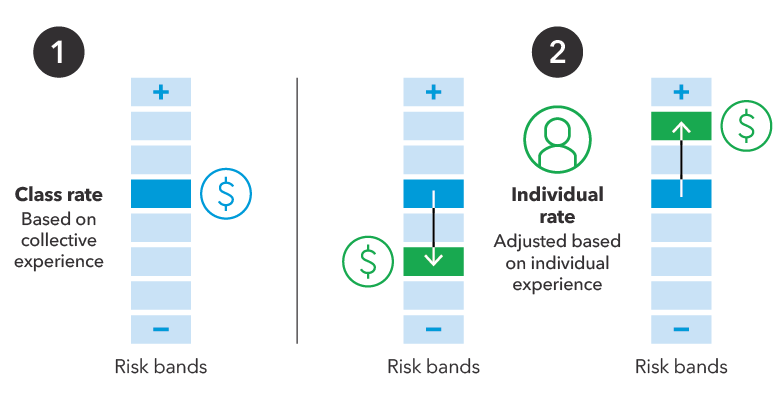
The 2019 Schedule 1 lost-time injury rate was 098 a 2 per cent decrease from 2018. An employers individual premium rate is a combination of the employers classification as well as their risk. 2020 premium rates reflect our new rate model and classification structure and are reflective of individual claims experience.
If you do not know your rate group number review the rate group descriptions in the WSIBs Employer Classification Manual. It is assumed a person works 2000 hours per year. Premium rates are set for each of the 35 classes and subclasses.
Changes to the Maximum Insurable Earnings Ceiling are directly linked to changes in average earnings in Ontario as measured by Statistics Canada and provisions under. The number of full time equivalent workers is an estimate based on employer reported insurable earnings divided by the average hourly wage for the rate group divided by 2000 hours. Mill Products and Forestry Services.
Veneers Plywood and Wood Preservation. The WSIB will be using the North American Industry Classification System NAICS which is already used by the Canada Revenue Agency and Statistics Canada. We work with organizations registered with WSIB to.
NEW CLAIMS COST BY RATE GROUP NEW CLAIMS COST BY RATE GROUP. Employers receive an individual risk-based premium rate. The WSIB Maximum Insurable Earnings Ceiling for 2021 is 102800 compared to 95400 in 2020.
This represents a premium decrease from a Schedule 1 average rate of 235 on every 100 of insurable payroll in 2018 to an average of 165 in 2019. 35 rows 2020 premium rates reflect our new rate model and classification structure and are reflective. Mechanical And Sheet Metal Work Premium Rate.
The Workplace Safety and Insurance Board WSIB recently announced that all businesses covered by their workplace insurance will pay the same rate in 2021 that they paid in 2020. Your WSIB Premium Remittance Form or the rate group numbers assigned to your WSIB account if available. 35 rows Rate group to class mapping.
Develop back-to-work strategies for injured employees. The 2020 premium rate is based on the 2019 rate group 755 rate and moving forward it will be based on the collective experience of all non-exempt partners and executive officers in construction. For companies with high salary executives that never went to construction sites this group greatly reduced WSIB premiums.
Mining had the biggest increase at 15 per cent. Learn more at wsibca2021premiumrates. Rate group 755 was the class for individuals who were partners or executive officers of a construction company who did not perform any construction work and have elected to be exempt.
251 per 100 of Insurable Earnings Schedule 1 The WSIB is now over 100 per cent funded which has reduced the Past Claims Cost PCC for businesses and resulted in rate reductions for almost all Rate Groups for 2019. There are modest rate increases for two rate groups. 2019 PREMIUM RATES BACKGROUNDER Rate Group 707.
Rate Group Description Cost Index Cost per Claim 2019 Premium Rate 030 LOGGING 206 50163 1040 033 MILL PRODUCTS AND FORESTRY SERVICES 65 15921 615 036 VENEERS PLYWOOD AND WOOD PRESERVATION 88 21504. There is a five per cent reduction on the average premium rate for Schedule 1 in 2017. The WSIB Maximum Insurable Earnings Ceiling for 2019 is 92600 compared to 90300 in 2018.
If your company used this rate group. Ensure you are in the correct rate group and paying the correct premiums. Represent employers at hearings and appeals.
Total Premium Rate 416 426 416 405 405 405 -26 Your Rate Groups final rate is the revised rate which is the lower of the originally published and revised published rates. The WSIB provides the following example of what it means for a rate to be weighted by payroll. With the implementation of the new rate setting model in.
The WSIB Maximum Insurable Earnings Ceiling for 2020 is 95400 compared to 92600 in 2019. Learn more about whats changing for you under our new model.
In 2024 and future years the regular risk band movement rules outlined in our premium rate. GTHA and ORHMA members are assessed under WSIB Rate GroupRG 919 Restaurants and Cateringand RG 921 Hotels Motels with 2015 premiums of 172 and 310 respectively.
 The New Wsib Rate Framework For Ontario Only
The WSIBs Rate Framework is Changing July 15 2019 On January 1 2020 the Workplace Safety and Insurance Board the WSIB will implement a new rate framework and will move from its current business classification structure to the North American Industry Classification System NAICS.

Wsib rate framework. On November 14 the Workplace Safety and Insurance Boards WSIB Board of Directors approved the Rate Framework. A classification scheme can have a single or multiple tiers. On behalf of the Board of Directors we would like to thank you for your ongoing support as we look towards a targeted implementation in January 2019 at the earliest.
In 2022 and 2023 if TEAs have components eligible for a risk adjusted premium rate rate setting will follow the risk band movement rules outlined in our transition to the rate framework policy. We have changed the way we set premium rates for the 300000 Ontario businesses covered by our workplace injury and illness insurance. 35 rows For the fourth year in a row the WSIB has been able to offer reductions to the average.
These changes are taking place in preparation for the new NAICS structure that will be implemented in 2020 as a part of the rate framework. Following policy consultations that took place from August 14 2017 to January 15 2018 the Workplace Safety and Insurance Board WSIB or the Board announced its new rate framework for employers. The WSIB has a four-tier classification scheme Us Rate Groups Sectors and Classes.
The new model uses a two-step approach to set and adjust premium rates for. Subscribe to our seasonal eNewsletter to receive updates about our new premium rate-setting model and other need to know information related to WSIB and workplace health and safety in Ontario. As part of this review the WSIB has developed a proposed preliminary Rate Framework.
The projected 2015 payroll projected by the WSIB for RG 919is 73 billion and for RG 92110 billion collectively over 23 of the Class Ipayroll. About Press Copyright Contact us Creators Advertise Developers Terms Privacy Policy Safety How YouTube works Test new features Press Copyright Contact us Creators. The WSIBs stated purpose of the Rate Framework is twofold.
WSIBwork newsletter Sign up for one of our rate framework educational webinars. This proposed model takes into consideration the recommendations of the Stanley report Pricing Fairness PDF and the WSIBs subsequent analysis. As we count down toward implementation my posts will provide quarterly updates and insights to.
I to establish employer classifications and premium rates that more accurately reflect the risk presented by individual employers. The WSIBs stated intention for the Rate Framework is to simplify and increase the fairness and transparency of how employers premium rates are set and adjusted by eliminating existing experience rating programs assigning premium rates that more accurately reflect the riskclaims history of individual employers and reducing year-to-year volatility in premiums. While employers are initially assigned to a CU premium rates are set at the rate group level.
And ii to incorporate stability measures to limit premium rate volatility. Schedule 1 employers should be aware that Ontarios Workplace Safety and Insurance Board WSIB will usher in its new rate framework on January 1 2020. This framework will replace current WSIB policies on classification structure rate setting and retroactive experience rating on January 1 2020.
The WSIB has initiated a review of its Employer Classification Premium Rate Setting and Experience Rating systems. Similarly employers can be classified based on a. Our new model came into effect January 1 2020 changing the way businesses are classified boosting fairness and increasing transparency in how premium rates are set and adjusted.
For these business activities certain obligations under the Workplace Safety and Insurance Act WSIA and WSIB policy will no longer apply.